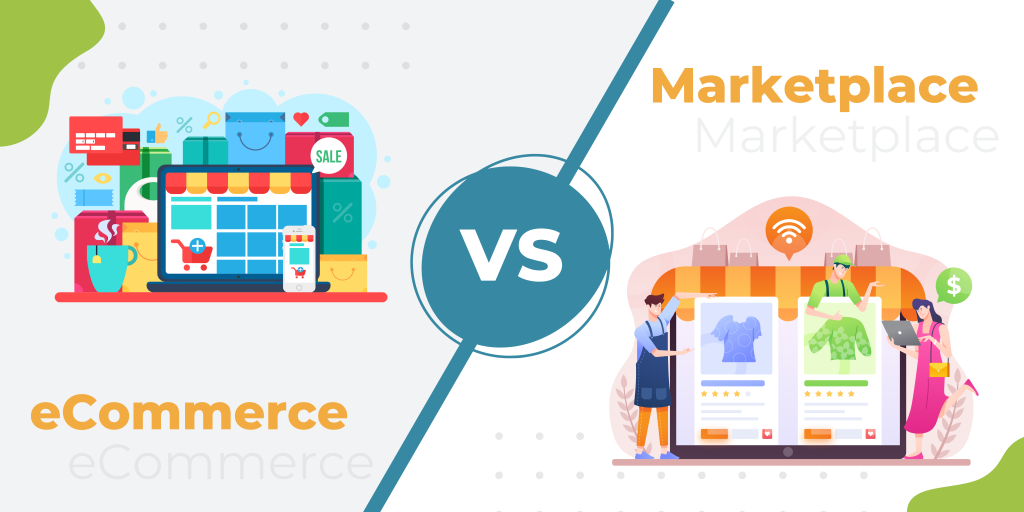

In the digital world, two business models dominate much of online commerce: traditional e-commerce and marketplaces. While both allow products to be sold online, their financial logic is very different. Analyzing their cost structure, capital requirements, risks, and margins is key to understanding which is more financially scalable.
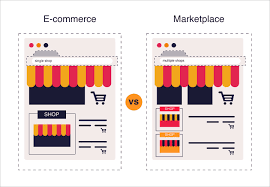
1. Costs: Inventory vs. Platform
Traditional E-Commerce:
- Purchases and stores products
- Pays for logistics, returns, and obsolescence
- Fixed costs: technology, marketing, personnel
💡 Example: An online clothing store needs to purchase hundreds of items before selling them. Each new unit increases storage costs, insurance, and return risk. Additionally, if a season ends and the stock doesn’t sell, that money remains tied up.
Marketplace:
- Acts as an intermediary between sellers and buyers
- Does not require its own inventory, which reduces significant financial risks
- Main costs: platform development, marketing, and quality control
💡 Advantage: Once the infrastructure is built, adding new sellers or products comes at a low marginal cost. For example, Etsy and Mercado Libre are able to scale their catalogs without needing to purchase products.
2. Required Capital: Light vs Heavy
E-commerce traditional:
- Requires significant capital to grow
- Needs to purchase more stock, expand warehouses, or finance working capital
- Risk: cash flow strain and dependence on external financing
💡 Practical example: An electronics e-commerce store wants to expand its smartphone catalog. To do so, it must purchase units before selling them, hire logistics staff, and expand storage, which involves significant upfront expenditures.
Marketplace:
- Lighter capital model
- Initial investment: technology and user acquisition
- Commission-based revenue improves cash flow and reduces capital needs.
💡 Real-world example: Amazon started by selling books and charging commissions to external sellers. This allowed it to grow rapidly without taking on the risks of purchasing massive inventory.
3. Margins: Volume vs. Leverage
E-commerce:
- Margins depend on the product and negotiating power with suppliers
- Highly sensitive to discounts, logistics, and returns
- Each additional sale may generate a small margin if costs grow proportionally
Marketplace:
- Revenue comes from commissions on each sale (5%-15%)
- Fixed costs do not increase with each transaction
- Result: at large scale, much higher margins más altos.
💡 Quick Comparison:
- E-Commerce: 15% margin per sale, costs increase with each unit.
- Marketplace: 10% margin per commission, fixed costs remain stable → each additional sale generates net profit.
4. Risks: Control vs. Dependence
E-commerce traditional:
- Clear risks: excess inventory, changes in demand, logistical issues, unreliable suppliers
- Advantage: full control over the customer experience and the value chain
Marketplace:
- Main risk: balancing supply and demand
- Other risks: disintermediation (sellers trying to bypass the platform), quality issues, or local regulations
- Requires constant investment in trust and reputation
💡 Example: Wish, a global marketplace, faced criticism for defective products, but its model allowed risk to be diversified across thousands of sellers while maintaining scalability.
5. Financial Scalability: Advantages and Challenges
From a strictly financial perspective, the marketplace is usually more scalable:
- Less capital required to grow
- Low marginal costs
- Potential for high operating margins at large scale
Traditional e-commerce, while easier to launch and control initially, faces clear limits: each increase in sales requires more capital, more logistical management, and greater financial risk.
💡 Strategic tip: Many successful companies combine both models. For example, an e-commerce business can allow third parties to sell on the platform, creating an internal marketplace that combines control with scalability.
6. Practical Cases That Demonstrate It
| Company | Model | Key to Success |
|---|---|---|
| Amazon | E-commerce → Marketplace | Scalability, seller network, and growing commissions |
| Zalando | E-commerce + Marketplace | Initial control of inventory, then catalog diversification with third parties |
| Mercado Libre | Pure Marketplace | Light capital and rapid growth through commissions |
These examples show how cost structure and financial scalability strategy determine a digital business’s growth potential and sustainability.
7. Additional Considerations
- Time to launch: E-commerce can become operational faster, while a marketplace requires platform development and user acquisition.
- Customer experience: E-commerce controls the entire experience, from purchase to delivery; the marketplace relies on external sellers to maintain quality.
- Flexibility: Marketplaces can diversify products quickly without purchasing inventory, allowing new categories to be tested with lower risk.
- Marketing: The marketplace needs to attract both buyers and sellers; e-commerce focuses marketing solely on customers.
💡 Practical example: Shopify allows e-commerce stores to be created quickly, while marketplaces like Etsy need time to build a community of active buyers and sellers.
8. Strategic Recommendation
- If your goal is scalability and long-term sustainable margins: marketplace
- If you want full control over products and the customer experience: traditional e-commerce
- If you want the best of both worlds: combine both models, using e-commerce for key products and a marketplace to diversify the catalog
✅ Conclusion
There is no universally “better” model. Each has its advantages and challenges:
Marketplace:
- Lower initial capital
- Decreasing marginal costs
- High operating margins at large scale
- Risk: dependence on the seller community and supply/demand balance
E-commerce traditional:
- Greater control over products and customer experience
- Lower initial complexity
- Risk: capital-intensive and scalability limitslabilidad
💡 Keys to Success: The strategic combination of both models can maximize scalability, financial efficiency, and control, leveraging the flexibility of the marketplace and the experience of traditional e-commerce.
In summary, for businesses seeking rapid growth with lower capital requirements, the marketplace has a structural advantage. For those who value control and branding, traditional e-commerce remains strong, but faces management challenges as it scales.